
Brainpower: Pathways to Neuro & Healthcare Careers
Brainpower: Pathways to Neuro & Healthcare Careers is an innovative, full-service training program designed to help job seekers launch careers in Ontario’s healthcare sector. The program begins with a comprehensive week of soft skills training, where participants develop job readiness skills such as résumé writing, interview preparation, digital literacy, and workplace communication. Following this, participants engage in a three-week hands-on training program focused on brain health and neuro rehabilitation, gaining practical experience for allied healthcare and support personnel. During this time, participants complete employer-hosted placements, earning real-world experience and connections to jobs. The program is supported by leading hospitals, rehabilitation clinics, and community partners who provide mentorship, curriculum input, and ongoing retention support. Graduates will be well prepared to enter the healthcare workforce, backed by industry-recognized skills, job readiness, and direct pathways to employment.

Invest in your workforce
Eligible employers can receive a wage subsidy for new and incumbent employees participating in the Brainpower program.
Interested in registering as a participant?
Program Overview
-
Week 1
Career Readiness Training
- Workplace communication
- Digital literacy
- Résumé development
- Interview preparation
-
Week 2 - 4
Clinical & Neuro-Rehabilitation Training
- Brain health fundamentals
- Patient-centred care
- Neuro-rehabilitation
- Role-specific clinical skills
-
Professional Development
- Employer-hosted placements*
- Hands-on mentorship
- Continuing education modules**
- Clinical resource library
*Job Seekers: Employer-hosted placement with hands-on learning and mentorship.
**Incumbent Employees: On-the-job training delivered within your workplace while employees continue in their current roles.
Built for Healthcare Professionals
-
Personal Support Workers (PSW)
Gain specialized knowledge to support TBI patients in daily care and rehabilitation settings.
-
Chiropractors
Integrate brain health principles into your practice with evidence-based neuro-rehabilitation techniques.
-
Physiotherapists
Enhance your treatment protocols with the 6 Pillar approach to optimize patient recovery outcomes.
-
Social Workers
Support TBI survivors holistically with tools for mindfulness, community care, and lifestyle management.
-
Occupational Therapists
Apply cognitive exercise and functional rehabilitation strategies grounded in neuroplasticity research.
-
Allied Health Professionals
Any healthcare professional committed to improving brain trauma outcomes through non-pharmacological methods.
What skills will participants gain?
BrainPower combines career readiness, healthcare & neuro-rehabilitation training, and practical workplace experience to prepare participants for careers in Ontario's healthcare sector.
-
Career Readiness Training
Healthcare Career Development
Build professional résumés, cover letters, LinkedIn profiles, and learn effective healthcare job search strategies.
Interview & Employment Preparation
Develop interview skills, professional confidence, workplace expectations, and long-term career planning.
Digital Literacy & AI
Use Microsoft 365, healthcare technology, electronic documentation systems, and AI tools to improve workplace productivity.
Professional Communication
Strengthen verbal, written, and interpersonal communication while working with patients, families, and healthcare teams.
Healthcare Workplace Readiness
Develop professionalism, patient-centred communication, confidentiality, teamwork, and workplace expectations.
Workplace Wellness & Career Success
Build resilience, cultural competency, emotional intelligence, conflict resolution, and strategies for long-term employment success. -
Healthcare & Neuro-Rehabilitation Training
Brain Injury Foundations
Understand traumatic brain injury, neuro-rehabilitation principles, and the evidence-informed 6-Pillar Integrated Care Model.
Integrated Brain Injury Care
Learn how the six pillars work together to support recovery through coordinated, interdisciplinary care.
Clinical Decision-Making
Develop clinical reasoning through Neurotrauma Care Pathways, rehabilitation planning, outcome measurement, and clinical documentation.
Evidence-Informed Practice
Apply best-practice guidelines, understand scope of practice, identify safety concerns, and recognize when referral or escalation is appropriate.
Applied Clinical Skills
Gain practical experience through pillar-specific learning, patient application, mentor feedback, and interdisciplinary collaboration.
Six Pillars of Brain Health
Explore Physical Exercise, Cognitive Exercise, Nutrition, Sleep, Mindfulness, and Limiting Harmful Exposures to support brain injury recovery.
Practical Workplace Experience
Participants apply their learning through employer-hosted workplace training alongside experienced healthcare professionals, gaining valuable hands-on experience, mentorship, and industry connections.
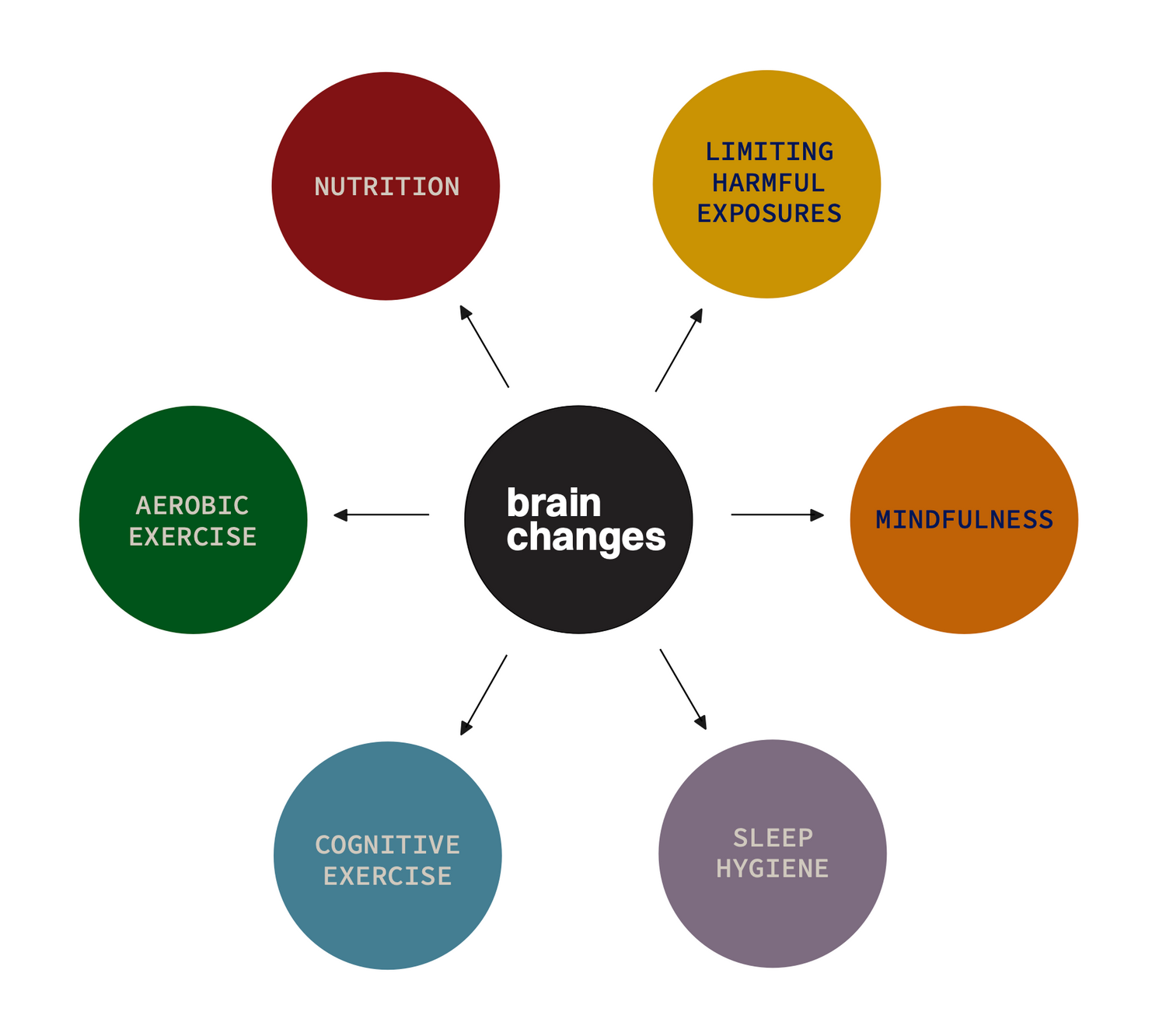
6 Pillars of Brain Health
We believe that everyone has the capacity to transform their brain by adopting a 6-pillar lifestyle approach to help the brain to heal, positively change and reach its optimal potential.
Why partner with BrainPower?
- Access job-ready healthcare candidates
- Upskill your existing workforce
- Reduce employee training costs
- Support the future of Ontario's healthcare workforce

Brainpower is delivered by the Brain Changes Initiative and funded through the Government of Ontario's Skills Development Fund Training Stream, administered by the Ministry of Labour, Immigration, Training and Skills Development.
Clinical & Neuro-Rehabilitation Training Detailed Outline
Detailed Course Summary
This course prepares independent healthcare practitioners to understand and apply the 6-Pillar Integrated Care Model for Persons with Traumatic Brain Injury (TBI). Participants complete shared implementation training, develop an understanding of all six pillars of care, and complete supervised applied training in two selected pillars using real patient application and mentor review.
4 CORE MODULES
Shared implementation training in integrated brain injury care
2 APPLIED PILLARS
Practice-focused learning selected by the participant
Module 1: Orientation and Bridge from Brain Injury Overview Course
Module Overview
This module introduces participants to the purpose, structure, and expectations of the Applied Training in Integrated Brain Injury Care program. It reviews foundational brain injury knowledge, explains how the course builds upon prerequisite education, introduces the 6-Pillar Integrated Care Model, and prepares participants for implementation-focused learning.
Lesson 1.1: Course Orientation and Brain Injury Foundations
Lesson Overview
This lesson orients participants to the course structure while reinforcing foundational knowledge from an approved brain injury overview course. It explains how implementation of the 6-Pillar Integrated Care Model builds upon existing brain injury knowledge and prepares participants for the remainder of the program.
Topics Covered
- Course purpose
- Review of foundational brain injury knowledge
- Brain injury compared with other injuries and chronic conditions
- Implementation-focused care
- Introduction to the 6-Pillar Integrated Care Model
- Course expectations
- Evaluation methods
Module 2: 6-Pillar Integrated Care Model
Module Overview
This module introduces the overall structure of the 6-Pillar Integrated Care Model for Persons with Traumatic Brain Injury. Participants learn how the Neurotrauma Care Pathways support evidence-informed clinical decision-making, understand professional scope and competency considerations, and recognize the importance of interdisciplinary communication throughout patient care.
Lesson 2.1: Understanding the 6-Pillar Integrated Care Model
Lesson Overview
This lesson introduces the rationale, structure, and purpose of the six pillars and explains how each pillar contributes to recovery, symptom management, rehabilitation, and participation following traumatic brain injury.
Topics Covered
- Purpose of the 6-Pillar Integrated Care Model
- Physical Exercise
- Cognitive Exercise
- Nutrition
- Sleep
- Mindfulness
- Limiting Harmful Exposures
Lesson 2.2: Neurotrauma Care Pathways
Lesson Overview
This lesson explains how the Neurotrauma Care Pathways provide the evidence-informed foundation supporting the 6-Pillar Integrated Care Model and guide clinical reasoning, referral decisions, and coordinated care.
Topics Covered
- Evidence-informed guidelines
- Connecting patient concerns to best-practice recommendations
- Scope of practice considerations
- Referral decision-making
- Clinical reasoning
Lesson 2.3: Professional Scope, Competency, and Team Communication
Lesson Overview
This lesson explains professional scope, competency, and interdisciplinary communication within the Integrated Care Model. Participants learn how coordinated communication supports safe, efficient, and patient-centred rehabilitation.
Topics Covered
- Scope of practice
- Professional competency
- Appropriate referrals
- Team communication
- Safety concerns
- Coordinated care
- Patient readiness
- Changes in symptoms
- Recommendations affecting other pillars
Module 3: Clinical Implementation Tools
Module Overview
This module introduces the standardized implementation tools used across all six pillars. Participants learn to define treatment targets, establish measurable goals, monitor outcomes, recognize safety concerns, and document clinical reasoning consistently across the care team.
Lesson 3.1: Rehabilitation Treatment Specification System (RTSS)
Lesson Overview
This lesson introduces the Rehabilitation Treatment Specification System (RTSS) and demonstrates how treatment targets, treatment ingredients, and mechanisms of action support consistent rehabilitation planning.
Topics Covered
- Treatment targets
- Treatment ingredients
- Mechanisms of action
- Clinical reasoning
Lesson 3.2: Goal Attainment Scaling (GAS)
Lesson Overview
This lesson introduces Goal Attainment Scaling (GAS) as a standardized approach for creating individualized, measurable goals that reflect meaningful functional outcomes.
Topics Covered
- GAS principles
- Writing measurable goals
- GAS scoring
- Functional outcomes
Lesson 3.3: Outcome Measurement
Lesson Overview
This lesson explains how outcome measurement supports patient care, quality improvement, and implementation across the Integrated Care Model.
Topics Covered
- Structure measures
- Process measures
- Outcome measures
- Monitoring patient progress
- Program implementation
Lesson 3.4: Safety, Escalation, and Documentation
Lesson Overview
This lesson introduces safety monitoring, referral and escalation considerations, and documentation practices that support coordinated, evidence-informed patient care.
Topics Covered
- Clinical red flags
- Referral and escalation
- Patient response
- Clinical reasoning
- Documentation
- Patient goals
- Treatment targets
- Patient response
- Goal Attainment Scaling
- Between-session planning
Module 4: Overview of the Six Pillars
Module Overview
This module provides participants with a foundational understanding of each of the six pillars within the Integrated Care Model before they begin applied training. Participants learn the rationale, intervention focus, relationship between pillars, relevant brain injury guideline mapping, and situations requiring referral or escalation for each pillar. This knowledge supports informed pillar selection and coordinated interdisciplinary care.
Lesson 4.1: Physical Exercise
Lesson Overview
This lesson introduces Physical Exercise as one of the six pillars of the Integrated Care Model. Participants learn how exercise supports recovery following traumatic brain injury, review common intervention approaches, understand how physical exercise interacts with other pillars, and recognize situations requiring referral or escalation.
Topics Covered
- Rationale for physical exercise following traumatic brain injury
- Intervention focus
- Brain injury guideline mapping
- Relationship to other pillars
- Referral and escalation considerations
Lesson 4.2: Cognitive Exercise
Lesson Overview
This lesson introduces Cognitive Exercise and explains how cognitive rehabilitation supports attention, memory, executive functioning, cognitive endurance, and participation. Participants examine intervention approaches, interdisciplinary overlap, and referral considerations.
Topics Covered
- Rationale for cognitive exercise
- Intervention focus
- Brain injury guideline mapping
- Relationship to other pillars
- Referral and escalation considerations
Lesson 4.3: Nutrition
Lesson Overview
This lesson introduces Nutrition as a pillar supporting recovery after traumatic brain injury. Participants explore the role of nutrition in rehabilitation, common intervention strategies, overlap with other pillars, and referral considerations when nutritional concerns extend beyond professional scope.
Topics Covered
- Rationale for nutrition
- Intervention focus
- Brain injury guideline mapping
- Relationship to other pillars
- Referral and escalation considerations
Lesson 4.4: Sleep
Lesson Overview
This lesson introduces Sleep as an essential component of rehabilitation following traumatic brain injury. Participants learn how sleep affects recovery, common intervention approaches, interactions with other pillars, and situations requiring referral or escalation.
Topics Covered
- Rationale for sleep
- Intervention focus
- Brain injury guideline mapping
- Relationship to other pillars
- Referral and escalation considerations
Lesson 4.5: Mindfulness
Lesson Overview
This lesson introduces Mindfulness as a strategy to support emotional regulation, stress management, symptom awareness, and intentional responses following traumatic brain injury. Participants examine intervention approaches, interdisciplinary overlap, and referral considerations.
Topics Covered
- Rationale for mindfulness
- Intervention focus
- Brain injury guideline mapping
- Relationship to other pillars
- Referral and escalation considerations
Lesson 4.6: Limiting Harmful Exposures
Lesson Overview
This lesson introduces Limiting Harmful Exposures and explains how reducing physiological and environmental stressors may support recovery following traumatic brain injury. Participants review intervention strategies, overlap with other pillars, and situations requiring referral or escalation.
Topics Covered
- Rationale for limiting harmful exposures
- Intervention focus
- Brain injury guideline mapping
- Relationship to other pillars
- Referral and escalation considerations
Career Readiness Training Detailed Outline
Detailed Course Summary
This course prepares participants with the professional, communication, digital, and workplace skills required for success in healthcare careers. Participants develop practical job search and interview skills, strengthen workplace communication and digital literacy, and build the professional behaviours, resilience, and cultural competency expected in modern healthcare environments. The course also prepares participants to transition successfully into employment through workplace readiness and long-term career planning.
8 CORE MODULES
Career readiness, workplace skills, and professional development for healthcare employment.
39 LESSONS
Practical learning focused on employment preparation, communication, digital literacy, workplace professionalism, diversity, resilience, and long-term career success in healthcare.
Module 1: Career Readiness
Module Overview
This module prepares participants to present themselvesveffectively to healthcare employers. It covers resumes, cover letters,vLinkedIn, job-search strategies, healthcare career pathways, and thevresponsible use of artificial intelligence to refinevapplication materials.
Lesson 1.1: Healthcare Resumes
Lesson Overview
This lesson explains what healthcare employers look for in avresume and how to create a professional, ATS-friendly document. Participants learn how to tailor a resume to a job posting and present education, certifications, placements, volunteer experience, and transferable skillsvclearly.
Topics Covered
· Healthcare resume structure
· ATS-friendly formatting
· Professional summaries
· Education and certifications
· Placements, volunteer work, and transferable skills
· Tailoring a resume to a healthcare job posting
Lesson 1.2: Healthcare Cover Letters
Lesson Overview
This lesson explains the purpose and structure of a professional healthcare cover letter. Participants learn how to connect their experience to an employer’s needs, personalize each application, and avoid common submission errors.
Topics Covered
· Purpose of a healthcare cover letter
· Professional one-page format
· Organization mission and core values
· Patient populations and services
· Keywords from the job posting
· Connecting experience to employer needs
· Application review and common mistakes
Lesson 1.3: Building a Professional LinkedIn Profile
Lesson Overview
This lesson introduces participants to building a professional LinkedIn profile that complements their resume and supports a healthcare job search. It explains how recruiters use LinkedIn and how participants can present their education, experience, certifications, skills, and professional interests.
Topics Covered
· Why LinkedIn matters in healthcare
· Resume versus LinkedIn
· Professional photo and headline
· About section
· Experience and education
· Skills and certifications
· Healthcare keywords
· Profile visibility
Lesson 1.4: Healthcare Job Search Strategies
Lesson Overview
This lesson helps participants develop a focused and consistent healthcare job-search strategy. It covers where to find
opportunities, how to read postings strategically, organize applications, build a professional network, and understand common hiring timelines.
Topics Covered
· General and healthcare-specific job boards
· Employer career pages
· Reading job postings strategically
· Application tracking
· Professional networking
· Following up
· Healthcare hiring timelines
· Public versus private employers
· Preparing documents early
· Building a weekly job-search routine
Lesson 1.5: Understanding Healthcare Career Pathways
Lesson Overview
This lesson introduces common career pathways for Personal Support Workers, Occupational Therapist Assistants, Physiotherapist Assistants,
and Mental Health Support Workers. It emphasizes continuous learning, transferable skills, and professional development after securing a first
healthcare role.
Topics Covered
· Personal Support Worker pathways
· Occupational Therapist Assistant pathways
· Physiotherapist Assistant pathways
· Mental Health Support Worker pathways
· Transferable skills across healthcare settings
· Career pathway planning
· Continuing education and professional
development
Lesson 1.6: Using AI to Refine Your Healthcare Resume
Lesson Overview
This lesson introduces artificial intelligence as an editing
and brainstorming assistant for healthcare job applications. Participants learn how to identify qualifications and keywords, improve resume wording, compare their resume with a target position, and review AI output for accuracy, authenticity, relevance, and privacy.
Topics Covered
· Identifying qualifications and keywords
· Tailoring an existing resume
· Strengthening summaries and experiencestatements
· ATS-friendly resume templates
· Grammar, repetition, and readability
· Reviewing AI output
· Protecting personal information
· Avoiding invented skills, experience, or accomplishments
Module 2: Interview Skills
Module Overview
This module prepares participants for healthcare interviews by covering behavioural questions, workplace scenarios, professional presentation, and structured interview practice.
Lesson 2.1: Mastering Behavioural Interview Questions
Lesson Overview
This lesson prepares participants to answer behavioural interview questions by connecting past experiences to the competencies healthcare employers assess. It emphasizes employer research, healthcare-specific examples, and structured responses using the STAR method.
Topics Covered
· Purpose of behavioural interview questions
· Employer and organization research
· Healthcare competencies
· STAR response structure
· Teamwork and conflict-resolution examples
· Connecting experience to the role
· What employers are assessing
Lesson 2.2: Healthcare Interview Scenarios
Lesson Overview
This lesson helps participants respond to situational healthcare interview questions. It emphasizes safe, professional, patient-centred judgment rather than memorizing every policy or clinical procedure.
Topics Covered
· Acknowledging the situation
· Identifying the immediate priority
· Explaining appropriate actions
· Explaining the reason for the response
· Responding to an upset patient
· Responding to a change in patient condition
· Addressing a colleague’s mistake
· Receiving constructive feedback
· Prioritizing multiple tasks
Lesson 2.3: Professional Appearance and First Impressions
Lesson Overview
This lesson explains how appearance, body language, communication, and professionalism shape an employer’s first impression. It connects professional presentation with the trust expected in healthcare environments.
Topics Covered
· Professional appearance
· Body language
· Confidence and professionalism
· Verbal communication
· Arrival and greeting
· Representing the organization
· Building trust with patients, families, and colleagues
Lesson 2.4: Mock Interviews
Lesson Overview
This lesson gives participants a structured way to practice healthcare interviews and evaluate their performance. It uses practice questions, feedback, self-evaluation, and scorecards to strengthen confidence and interview readiness.
Topics Covered
· Interview preparation checklist
· Practice questions
· Professional introductions
· Eye contact and body language
· Using the STAR method
· Peer feedback
· Self-evaluation
· Reflection
· Interview scorecards
Module 3: Digital Literacy
Module Overview
This module builds confidence with the digital tools commonly used in healthcare workplaces. It covers workplace technology, Microsoft 365, professional email and calendar use, Microsoft Teams, responsible AI, electronic documentation systems, cybersecurity, privacy, and digital professionalism.
Lesson 3.1: Digital Skills in Modern Healthcare
Lesson Overview
This lesson explains why digital literacy is essential in healthcare and introduces common workplace technologies. Participants learn the expectations for professional, safe, and responsible technology use.
Topics Covered
· Digital literacy in healthcare
· Email and workplace communication
· Electronic health records
· Scheduling software
· Microsoft Teams and video meetings
· Microsoft Office
· Shared documents
· Professional technology use
Lesson 3.2: Getting Started with Microsoft 365
Lesson Overview
This lesson introduces the core Microsoft 365 tools used in healthcare workplaces. Participants learn how to navigate the platform, create and organize files, use cloud storage, and collaborate through shared documents.
Topics Covered
· Microsoft 365 overview
· OneDrive
· Word
· Excel
· PowerPoint
· Outlook
· Teams
· Browser versus desktop applications
· Saving and organizing files
· File naming
· Sharing files
Lesson 3.3: Professional Email and Calendar Management
Lesson Overview
This lesson teaches participants how to write professional emails, organize Outlook, schedule meetings, manage calendars, and respond appropriately in a healthcare workplace.
Topics Covered
· Email structure
· Subject lines
· Professional greetings and closings
· Attachments
· CC versus BCC
· Email etiquette
· Calendar invitations
· Accepting and scheduling meetings
· Availability and reminders
· Searching and organizing email
· Folders
Lesson 3.4: Microsoft Teams and Virtual Healthcare Communication
Lesson Overview
This lesson prepares participants to use Microsoft Teams confidently and communicate professionally in virtual healthcare settings. It covers meetings, chat, channels, file sharing, screen sharing, status indicators, and basic troubleshooting.
Topics Covered
· Teams interface
· Joining meetings
· Chat and channels
· File sharing
· Screen sharing
· Status indicators
· Meeting etiquette
· Virtual professionalism
· Backgrounds
· Audio and video troubleshooting
Lesson 3.5: Responsible AI for Healthcare Job Seekers
Lesson Overview
This lesson introduces artificial intelligence tools that can support job searching and workplace communication. Participants learn how
to write prompts, improve application materials, practise interviews, research
employers, and use AI responsibly without overreliance.
Topics Covered
· What AI is
· Benefits and limitations
· Privacy considerations
· Prompt writing
· Resume and cover-letter support
· Interview practice
· Employer research
· Career exploration
· Learning and grammar support
· Responsible AI use
Lesson 3.6: Introduction to Electronic Documentation Systems
Lesson Overview
This lesson introduces electronic documentation and common healthcare software. Participants learn the importance of objective, timely, accurate, and confidential documentation using professional terminology.
Topics Covered
· Electronic health records
· Objective language
· Timeliness
· Accuracy
· Professional terminology
· Confidentiality
Lesson 3.7: Cybersecurity, Privacy, and Digital Professionalism
Lesson Overview
This lesson explains how healthcare workers protect confidential information and use digital tools responsibly. It covers secure passwords, phishing awareness, device security, privacy expectations, social media, and digital footprints.
Topics Covered
· Strong passwords
· Multi-factor authentication
· Phishing and social engineering
· Public Wi-Fi
· Locking computers and devices
· Confidential documents
· Privacy requirements
· Social media professionalism
· Digital footprints
· Workplace policies
Module 4: Workplace Communication
Module Overview
This module develops the verbal and written communication skills needed to work effectively with healthcare teams, patients, and families. It also introduces professional documentation practices that support safe and coordinated care.
Lesson 4.1: Professional Communication in Healthcare
Lesson Overview
This lesson focuses on clear, respectful verbal communication within the healthcare team. Participants learn how communication among coworkers, supervisors, physicians, therapists, and support staff contributes to safe, coordinated, and high-quality care.
Topics Covered
· Communication within the healthcare team
· Clear and respectful language
· Team coordination
· Communication with supervisors and colleagues
· Professional tone
· Supporting safe and high-quality care
Lesson 4.2: Communicating with Patients
Lesson Overview
This lesson introduces patient-centred communication techniques that help healthcare professionals build trust, support understanding, and respond respectfully to patients and families. It emphasizes active listening, empathy, clear communication, and adapting communication to individual needs.
Topics Covered
· Patient-centred communication
· Active listening
· Empathy
· Clear explanations
· Adapting communication styles
· Supporting understanding
· Respectful communication with patients and families
Lesson 4.3: Professional Written Communication
Lesson Overview
This lesson explains how healthcare professionals communicate through email, secure workplace messaging, shift reports, and patient handovers. It emphasizes clear, concise writing that allows readers to understand the message without additional explanation.
Topics Covered
· Professional email
· Secure workplace messaging
· Shift reports
· Patient handovers
· Clear and concise writing
· Placing important information first
· Professional tone and accuracy
Lesson 4.4: Documentation in Healthcare
Lesson Overview
This lesson introduces the importance of accurate, objective, and timely documentation in healthcare. Participants learn how documentation supports continuity of care, patient safety, communication among the healthcare team, and professional accountability.
Topics Covered
· Purpose of documentation
· Accuracy
· Objectivity
· Timeliness
· Continuity of care
· Patient safety
· Team communication
· Professional accountability
Module 5: Healthcare Workplace Readiness
Module Overview
This module introduces the professional behaviours and judgment needed in healthcare workplaces. It covers patient-centred care, professional boundaries, empathy and compassion, privacy and confidentiality, and interdisciplinary teamwork.
Lesson 5.1: Patient-Centred Care
Lesson Overview
This lesson introduces the principles of patient-centred care. Participants learn how individual values, preferences, and goals influence care and how to support dignity, autonomy, independence, and
participation while considering safety.
Topics Covered
· Principles of patient-centred care
· Individual values and preferences
· Patient goals
· Dignity and respect
· Autonomy and independence
· Balancing safety and participation
· Everyday patient-centred interactions
Lesson 5.2: Professional Boundaries
Lesson Overview
This lesson explains the difference between professional and
personal relationships in healthcare. Participants learn to recognize blurred
boundaries, boundary crossings, and boundary violations and to use professional judgment when they are unsure.
Topics Covered
· Professional versus personal relationships
· Therapeutic relationships
· Blurred boundaries
· Boundary crossings
· Boundary violations
· Limited self-disclosure
· Maintaining professionalism
· Seeking guidance when unsure
Lesson 5.3: Empathy, Compassion, and Professional Resilience
Lesson Overview
This lesson explores empathy, compassion, and professional resilience in healthcare. Participants learn how compassionate care supports positive patient experiences while maintaining appropriate professional boundaries and protecting their own well-being.
Topics Covered
· Empathy, sympathy, and compassion
· Compassion in everyday care
· Seeing the person behind the diagnosis
· Professional boundaries
· Compassion fatigue awareness
· Reflection and self-awareness
Lesson 5.4: Privacy, Confidentiality, and Professional Responsibility
Lesson Overview
This lesson explains the difference between privacy and confidentiality and how patient information can be unintentionally compromised. Participants learn when information may be appropriately shared and how professional judgment protects patient trust.
Topics Covered
· Privacy versus confidentiality
· Protecting patient information
· Common confidentiality risks
· Appropriate information sharing
· Professional judgment
· Professional responsibility
· Protecting patient trust
Lesson 5.5: Interdisciplinary Teamwork and Collaboration
Lesson Overview
This lesson examines the importance of interdisciplinary teamwork and collaboration in healthcare. Participants learn how respectful communication, shared responsibility, and professional judgment contribute to safe, coordinated, and patient-centred care.
Topics Covered
· Interdisciplinary teamwork
· Roles and responsibilities
· Shared responsibility
· Collaborative problem-solving
· Professional communication
· Professional judgment
· Coordinated patient-centred care
Module 6: Diversity and Cultural Competency
Module Overview
This module prepares participants to provide respectful, inclusive, and individualized care. It covers diversity, accessibility, trauma-informed practice, and communication strategies that respond to different patient needs.
Lesson 6.1: Understanding Diversity in Healthcare
Lesson Overview
This lesson helps participants recognize visible and invisible forms of diversity and understand how assumptions can affect patient care. It emphasizes individualized interactions and awareness of unconscious bias.
Topics Covered
· Visible and invisible diversity
· Individualized care
· Assumptions in healthcare
· Unconscious bias
· Challenging bias
· Treating the individual rather than the
assumption
Lesson 6.2: Accessibility and Inclusive Care
Lesson Overview
This lesson explores accessibility barriers beyond the physical environment. Participants learn how to adapt communication, support patient independence, offer appropriate assistance, and recognize the expertise patients bring to their own care.
Topics Covered
· Physical and non-physical barriers
· Accessible communication
· Patient independence
· Appropriate assistance
· Patient expertise
· Inclusive interactions
· Removing barriers through everyday practice
Lesson 6.3: Trauma-Informed Care
Lesson Overview
This lesson introduces the purpose and principles of trauma-informed care. Participants learn how to avoid causing additional harm and use practical strategies that promote safety, trust, choice, and respectful care.
Topics Covered
· Purpose of trauma-informed care
· Core trauma-informed principles
· Promoting safety and trust
· Supporting patient choice
· Recognizing potential sources of distress
· Avoiding unnecessary retelling
· Care without causing additional harm
Lesson 6.4: Inclusive Communication
Lesson Overview
This lesson teaches participants how to adapt communication to individual patient needs. It covers strategies for improving understanding, working with interpreters and support persons, encouraging participation, and checking understanding respectfully.
Topics Covered
· Adapting communication
· Improving patient understanding
· Interpreters and support persons
· Encouraging patient participation
· Checking understanding
· Avoiding embarrassment or confusion
· Respectful inclusive communication
Module 7: Mental Health, Resilience, and Wellness
Module Overview
This module introduces practical ways to recognize and manage workplace stress, reduce the risk of burnout, practice realistic self-care, use emotional intelligence, and build resilience in healthcare settings. It also recognizes that mental wellness is supported by individuals, teams, supervisors, and organizations.
Lesson 7.1: Stress in Healthcare
Lesson Overview
This lesson explains how stress can help healthcare workers respond to urgent situations and when it becomes a concern. Participants learn to recognize common sources and signs of stress and use practical strategies
during a shift.
Topics Covered
· Purpose of the stress response
· Common sources of stress in healthcare
· Physical signs of stress
· Emotional signs of stress
· Effects on thinking and performance
· Managing stress during a shift
· Recovery and support
Lesson 7.2: Burnout and Compassion Fatigue
Lesson Overview
This lesson explains burnout and compassion fatigue and how they can affect concentration, communication, problem-solving, and care. Participants learn to recognize early warning signs, reduce risk, and seek support.
Topics Covered
· Burnout
· Compassion fatigue
· Differences between burnout and compassion fatigue
· Early warning signs
· Effects on work and well-being
· Reducing risk
· Seeking support
Lesson 7.3: Practical Self-Care
Lesson Overview
This lesson presents self-care as practical habits that help healthcare workers continue providing safe and compassionate care. It covers everyday routines, brief strategies during busy shifts, professional boundaries, and knowing when to ask for help.
Topics Covered
· Meaning of self-care in healthcare
· Everyday self-care habits
· Brief resets during a shift
· Transitions between tasks
· End-of-shift transition
· Professional boundaries
· Knowing when to ask for help
Lesson 7.4: Emotional Intelligence
Lesson Overview
This lesson introduces emotional intelligence as the ability to recognize and manage personal emotions while responding appropriately to others. It explains how emotional intelligence supports communication, trust, teamwork, conflict management, and compassionate care.
Topics Covered
· Self-awareness
· Managing emotions
· Empathy
· Active listening
· Managing conflict
· Looking beyond behaviour
· Trust and teamwork
Lesson 7.5: Building Resilience
Lesson Overview
This lesson defines resilience as the ability to adapt, recover, and continue functioning during or after challenges. It emphasizes that resilience is supported by individuals, teams, and organizations.
Topics Covered
· Individual resilience
· Team resilience
· Organizational support
· Adapting to challenges
· Recovery
· Shared responsibility for workplace wellness
Module 8: Employment Success Planning
Module Overview
This module supports participants as they transition into employment and plan for long-term success. It covers the first 90 days, expectations beyond the job description, professional responses to workplace challenges, and ongoing career development.
Lesson 8.1: Succeeding in Your First 90 Days
Lesson Overview
This lesson helps participants build effective learning habits during their first few months of employment. It emphasizes initiative, recognizing limits, seeking and applying feedback, building workplace relationships, and setting realistic improvement goals.
Topics Covered
· Learning habits
· Initiative and role limits
· Seeking feedback
· Applying feedback
· Building workplace relationships
· Continuous improvement
· First-90-day goals
Lesson 8.2: Workplace Expectations Beyond the Job Description
Lesson Overview
This lesson explains the everyday habits that build trust in the workplace. Participants learn how reliability, accountability, ownership of mistakes, appropriate initiative, and respect for scope of practice contribute to long-term success.
Topics Covered
· Reliability
· Accountability
· Taking ownership of mistakes
· Appropriate initiative
· Scope of practice
· Everyday workplace habits
· Building trust
· Unwritten workplace expectations
Lesson 8.3: Handling Workplace Challenges Professionally
Lesson Overview
This lesson explains how experienced staff respond to difficult workplace situations. Participants learn professional approaches to feedback, disagreements, difficult coworkers, escalation, emotional regulation, and corrections to their work.
Topics Covered
· Receiving feedback
· Responding without defensiveness
· Workplace disagreements
· Difficult coworkers
· Appropriate escalation
· Emotional regulation
· Professional language
· Responding to corrections
Lesson 8.4: Building a Long-Term Career
Lesson Overview
This lesson explores how ongoing learning, professionalism, and continuous improvement support a successful healthcare career. Participants consider professional development, mentorship, networking, workplace engagement, and long-term career planning.
Topics Covered
· Long-term career goals
· Ongoing learning
· Professional development
· Mentorship
· Networking
· Workplace engagement
· Continuous improvement
· Career planning
-
BRAIN CANADA FOUNDATION
LEARN MORE -
BRAIN INJURY ASSOCIATION OF WINDSOR AND ESSEX COUNTY
LEARN MORE -
BRANCH OUT NEUROLOGICAL FOUNDATION
LEARN MORE -
RUN FOR LIFE
LEARN MORE